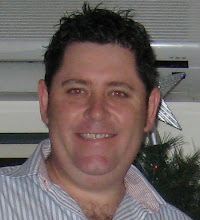
Robert Craddock has seen and written about all cricket has to offer for nearly two decades. Now with a young family at home, he’s putting away the passport for life on the home front. But who is the man behind the pen?
Its nine o’clock on a Friday night, the kids are in bed and one of Australia’s most travelled sports writers is settling in for a quite evening at home. For 16 years Robert ‘Crash’ Craddock lived his passion, travelling Australia and the globe as the News Limited group cricket writer, but for now he seems very content enjoying life closer to home and family.
As the newly appointed Chief Sports Writer for Brisbane’s Courier Mail, Craddock’s role these days is to comment on the issues of the day, something that he says is enjoyable and challenging at the same time. Unlike his previous existence as a cricket expert, Craddock is now expected to be across all sports and provides a regular weekly column as well as comment pieces when the bigger news stories break.
For a man with so many years experience as a print journalist, Craddock’s passion for his job is obvious when he talks about his new role.
“One thing I’ve always loved, from day one to now, is as a bloke said to me on my first day that you know you’re finished in this job when you want the clock to go faster rather than slower and I still want it to go slower. I still look up and can’t believe it’s three o’clock everyday,” he says.
The son of a dentist, Craddock grew up on two acres in Caboolture on Brisbane’s northern suburbs and says his childhood was that of many young boys in the 1970s.
Footy in the winter and cricket in the summer with a bit of golf in between, Craddock’s love of sport was assured at an early age.
Like many young kids, Craddock dreamed of being a cricket star but clearly remembers the time he realised that not all dreams would become a reality. As a junior wicketkeeper, Craddock recounts the “quantum moment when you know you’re no good.”
“I’ll never forget hearing Rod Marsh in an interview say that you know you’re not a natural wicketkeeper if when you’re keeping up over the stumps, you take a step back, it means you’re scared of the ball. I used to take steps back all the time and I just remember thinking I’ll never be any good,” he says.
Fortunately, his lack a physical ability didn’t erode his passion for sport, merely acting as the impetus to find an alternate route to craft out a career in or around sport. Journalism proved the vehicle and after completing his cadet years he found his way to News Limited and his dream job following the sport and team he loved.
It’s fair to say Craddock couldn’t have timed his years with the Australian Cricket Team any better. During his tenure covering the sport, Australia went from cricket also-rans to bona-fide world champions in every form of the game and Craddock was there to share the experience with all Australians.
From Shane Warne’s ‘Ball of the century’ in the 1993 Ashes series in England, to Matthew Hayden’s world record breaking innings of 380 in Perth, Craddock has witnessed and shared many of Australian cricket’s greatest moments. But amongst all those memories a clearly proud Craddock remembers Australia’s triumph over the West Indies in 1995 as his favourite.
“They had so much against them on that tour. Craig McDermott was injured and the West Indies hadn’t lost for 15 years. I remember poking my head into the West Indies dressing room after they lost. I just had to, and they were absolutely crestfallen. I can still see the look on Curtley Ambrose’s face. He was just staring down into his gear coffin, totally listless and absolutely broken,” he says.
It’s through Craddock’s columns that many Australians shared the experience of that tour, which was seen by only a limited amount of cricket fans through the early days of pay television.
Craddock’s favourite moments are not limited to feats of brilliance on the field however, as he fondly recalls a rare opportunity to meet Mother Theresa. He had accompanied Australian cricket captain Steve Waugh to Calcutta where she was attending mass and he smiles as he recalls the meeting.
“Steven was so excited by it he had wanted to visit her for ages. She was having mass at this tiny little chapel and the light was coming through the shutters reminding me of an old school classroom. Steven was a guy that never ever showed his excitement except that it made him talk a lot and that morning we couldn’t shut him up. It was just a wonderful occasion that I’ll never forget. It was beautiful,” he says.
Many journalists thrive on the thrill of breaking an exclusive story and Craddock is no different. “One of the exciting things for me about newspapers is there is a certain moment when you know a story is going to be big but only you really know it,” he says.
Despite breaking hard hitting news stories such as star players Mark Waugh and Shane Warne’s involvement with illegal bookmakers, he recalls a more light-hearted story that he knew would be big news in Australia. During a chance discussion with Australian physiotherapist Errol Alcott, Craddock learned of a special shipment of baked beans that was in transit to India to satisfy star player Shane Warne’s limited palate and immediately recognised how his readers would enjoy the story.
“As I sat at my terminal in a silent little room in the middle of nowhere I remember thinking that story would just light up Australia and it did, it got massive airplay and became a huge talking point. This is the thing I really cherish about journalism, tomorrow two million Australians may be talking about it, but today, as you type it into your computer only you know the story,” he says.
Despite all the great memories, Craddock admits that the life of a touring journalist is fraught with the perils of loneliness and occasional conflict. A sigh and pause is evident as he lists some of the players he has fallen out with over the years after writing less than flattering accounts of their performances. He laments that some, including Australian great, Mark Waugh, still refuse to talk with him.
“It’s no fun to be on tour when you’re in a little port in India or a little town in Sri Lanka and you just run into each other ten times a day. Having said that, it’s part of the job and you just have to face up to it,” he says.
Craddock recalls an occasion in the small province of Goa in India where he was rooming next to Steve Waugh. Through the paper thin walls he remembers how he could hear Waugh dialling up the internet to read Craddock’s column within moments of filing.
“If you criticised him, it was basically like you were sharing a house with him...it could be pretty intimidating,” he says.
In recent years Craddock has added author to his resume penning biographies for former Australian cricketers Ian Healy and Matthew Hayden. Despite writing the books being one of the most challenging jobs of his career, he says the opportunity to get inside the heads of these great athletes was too good to pass up.
With the cricket chapter of his career now becoming a memory, Craddock’s passion has not waned as he embarks on his new role as an opinion maker and commentator. With so many wonderful experiences already behind him, and his love for the job continuing to shine, Craddock appears to be one of the lucky few that find their calling early and hang on to enjoy the ride.
Mondays Expert

Subscribe to:
Post Comments (Atom)
No comments:
Post a Comment